
Prime Minister Narendra Modi celebrated India's 7.8 per cent GDP growth in the April-June quarter, attributing it to the collective strength of the people despite global uncertainties. He criticised "doomsayers" as the economy showed resilience, exceeding expectations even amidst international conflicts and supply chain issues.

Prime Minister Narendra Modi lauded India's 7.8 per cent GDP growth, achieved despite global conflicts and instability. He emphasised the importance of Swadeshi and self-reliance for a developed India by its 100th year of Independence, urging citizens to avoid unnecessary foreign expenditures.

India's economy recorded a robust 7.8 per cent growth in the April-June quarter of fiscal year 2026-27, surpassing both market expectations and the Reserve Bank of India's forecast. This strong performance positions India as the world's fastest-growing major economy, demonstrating resilience despite global economic uncertainties and geopolitical tensions, including the conflict in Iran. The Ministry of Statistics and Programme Implementation highlighted the sustained growth momentum amidst global headwinds.

India's largest IT services company, TCS, announced a 4.61 per cent increase in its net profit to Rs 13,349 crore for the June 2026 quarter, with revenues climbing nearly 14 per cent year-on-year.

Iranian President Masoud Pezeshkian arrived in New Delhi for the BRICS summit, where he is scheduled to hold bilateral talks with Prime Minister Narendra Modi to enhance trade and strengthen overall relations. His visit is particularly significant given the heightened tensions in West Asia and recent US economic sanctions against Iran. Pezeshkian highlighted BRICS' role in fostering economic resilience and reducing dependence on the US dollar, while the summit itself aims to address global challenges and bolster collective resilience in critical sectors.

The Reserve Bank of India has marginally increased its GDP forecast for the current fiscal to 6.7 per cent while slightly lowering the inflation projection to 5 per cent. The central bank noted that while domestic economic activity shows resilience, global turbulence, particularly re-escalating conflicts and volatile oil prices, continues to pose risks to the inflation outlook.

Prime Minister Narendra Modi hosted Iranian President Masoud Pezeshkian in New Delhi for talks focusing on the West Asia situation, bilateral relations, and BRICS cooperation. The meeting, Pezeshkian's first visit to India as president, comes amidst heightened tensions in West Asia due to new US sanctions on Iran and concerns over global oil supplies from the Strait of Hormuz. Both leaders emphasised regional stability and economic resilience.

India's top 11 listed real estate developers are projected to achieve combined presales of 1.82 trillion by FY27, a significant increase from 1.49 trillion in FY26, demonstrating sustained sales momentum despite market challenges.

'I don't really expect the August increase in food prices, which was close to 6 per cent, to persist as we go close to the end of this year.'
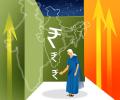
The World Bank has affirmed India's strong position to withstand the current global energy shock, citing high foreign exchange reserves, fiscal space, and low inflation as key buffers supporting continued growth despite international headwinds.

BRICS nations have successfully reached a consensus on a joint statement following extensive negotiations, with India playing a crucial role in bridging differences, particularly among West Asian members like Iran, Saudi Arabia, and the UAE, despite regional conflicts and geopolitical tensions.

New completions in India's office real estate sector fell by 36 per cent to 9.7 million square feet in Q1 2026, the lowest in four quarters, primarily due to developers adopting a cautious stance amid global uncertainties, particularly in Bengaluru, Hyderabad, and Mumbai. Despite this, office absorption increased by 20 per cent, indicating strong occupier demand.
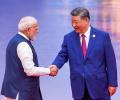
India's dual pursuit of a robust strategic partnership with Washington and a pragmatic, tension-management policy with Beijing represents the essence of modern multi-alignment. By embracing economic pragmatism, learning to compartmentalize political differences, and engaging in continuous dialogue, India can secure its borders, grow its economy, and contribute to a stable, multipolar Asian century, points out Ambassador Rajasekhar.

The 2026 FIFA World Cup, co-hosted by the United States, Mexico, and Canada, is set to be football's largest tournament but will unfold against a backdrop of significant geopolitical tensions, including conflicts, strained alliances, and complex immigration policies, challenging its traditional role as a symbol of global unity.

India's macroeconomic health is in a "relative goldilocks situation", and although the risk of higher landed oil prices, due to insurance cost surges and closure of choke points due to the brief Israel-Iran war, has receded, it is "too soon to sound the 'all clear' for the rest of the year", the Finance Ministry said on Friday.

West Asia conflict triggers sharp sell-off in Indian markets, with realty, banking and auto stocks leading losses amid energy shock fears.

The disbursement of the second tranche comes on a day when the International Monetary Fund is holding virtual discussions on Pakistan's upcoming budget, as the visit of its mission to Islamabad was delayed due to security concerns in the region.

Gripped with fear as an investor following a 12 per cent market fall? Here's Radhika Gupta's advice to investors.

Salaries in India are expected to increase by 9.5 per cent in 2024, slightly lower than the actual increase of 9.7 per cent in 2023, largely in response to market dynamics, according to global professional services firm Aon plc. According to the firm's annual salary increase and turnover survey 2023-24 India, that analysed data across 1,414 companies from almost 45 industries, salary increase in India seems to have stabilised at high single digits, after the post-pandemic high increments in 2022. "The projected increase in salaries in the Indian formal sector indicates a strategic adjustment in response to the evolving economic landscape.
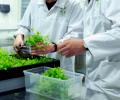
Several leading scientists, academicians, and agriculturalists have called for raising government support for research and development to make Indian agriculture future-ready.

The leaders said they stand for adherence to international law, peaceful resolution of disputes and respect for principles of the UN Charter, including territorial integrity and sovereignty of all states.

The 54-page document tabled in Parliament detailed how the Modi-government pull the economy from being counted among the most fragile-five in the world to being the fasted growing and the most attractive investment destination.

A 'White Paper' versus 'Black Paper' battle erupted on Thursday as the Centre and the Congress unveiled documents and crossed swords over the handling of the Indian economy during the nearly 10 years of the BJP-led NDA rule and the previous 10-year tenure of the Congress-led UPA government.

'As we enter 2025, it must be acknowledged that there is a convergence of capital, influential people (from business and politics) and technology deciding the destiny of others in the name of pride, patriotism, nationalism, nation building, all of it thinly veiled disguises for personal profit and glory,' asserts Shyam G Menon.

The United States-China Summit meeting concluded at a sprawling mansion in Woodside, California with Presidents Joe Biden and Xi Jinping agreeing to work towards ensuring that the differences between the two countries remain manageable and the relations do not derail.
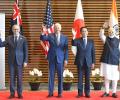
Biden welcomed Prime Minister Modi at the Summit and said "it is wonderful to see you again in person".

Digital literacy is emerging as the professional language of 2024. It is the ability to process complex data sets, deploy critical communication technologies appropriately and validate your importance at your workplace, explains Jagdeep Kochar, managing director, Baker & Taylor India.

'Given the worries about sluggish growth, rising interest rates and likely volatility, it's quite logical to infer that the SIP route could be the preferred way of investing.'
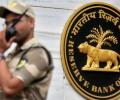
The Reserve Bank of India on Wednesday retained the economic growth projection for the current financial year at 10.5 per cent, while cautioning that the recent surge in COVID-19 infections has created uncertainty over the economic growth recovery. In its last policy review, the RBI had projected a GDP growth rate of 10.5 pc for FY'22. Taking various factors into consideration, it said, "the projection of real GDP growth for 2021-22 is retained at 10.5 per cent consisting of 26.2 per cent in Q1, 8.3 per cent in Q2, 5.4 per cent in Q3 and 6.2 per cent in Q4."

Prime Minister Modi, who is in Japan on a two-day visit to attend a summit of the Quad leaders at the invitation of his Japanese counterpart Fumio Kishida, penned an op-ed on the vibrant relations between India and Japan in the Yomiuri Shimbun.
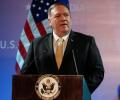
The United States, he said, 'desires a new age of ambition' in its relationship with India. Asserting that the US has never been more supportive of India's security, he said New Delhi too, is an important partner and a key pillar of President Trump's foreign policy.

Continuing with the same behaviour while things around you change is a sure recipe for failure. Successful leaders will demonstrate agility and adaptability.

In his fifth address as President, Pranab Mukherjee asked authorities and institutions of the State to adhere to the 'dignity' in discharging their duties.

Prime Minister Narendra Modi on Thursday address Members of the British Parliament in London where he promised to open more doors of cooperation between the two countries and delved on issues like terrorism and United Nations reforms.
